
What Size Rug for a Living Room?
A rug does much more than just add softness underfoot. The right size rug brings your furniture together, defines the seating area, and makes your living room feel complete and intentional.
Large rugs are one of the most effective ways to create a balanced and visually cohesive space.
One of the most common interior design mistakes is choosing a rug that is too small. When a rug sits only under the coffee table, the space can feel disconnected and unfinished. When the rug is properly sized in relation to your sofa and surrounding furniture, the entire room feels more comfortable, grounded, and inviting.
In this guide, you’ll learn three proven ways to choose the right rug size for your living room, along with practical measurements and layout tips that work in real homes.
Why Rug Size Matters in a Living Room
A rug acts as a visual anchor in your living room. It defines the seating area and brings all elements together into one cohesive space.
The right rug size:
- connects the sofa, chairs, and coffee table
- makes the room feel more balanced
- adds warmth and softness
- improves acoustics
If the rug is too small, furniture can feel like it’s floating in the room. A well-sized rug creates a clear, comfortable living area that feels easy to use and visually calm.
Three Proven Rug Layouts for Living Rooms
1. All Furniture on the Rug
This is the most cohesive and high-end look. The rug is large enough to fit the sofa, chairs, and coffee table entirely on top.
Best for:
- large living rooms
- open layouts
- sectional sofas
Typical US sizes:
- 8×10 ft
- 9×12 ft
- 10×14 ft
A larger rug creates a calm, finished look and clearly defines the entire seating area.
👉 If you’re looking for large rug options, see also:
Best Large Rugs for Living Room – 6 Stylish and Practical Picks
2. Front Legs on the Rug (Most Popular)
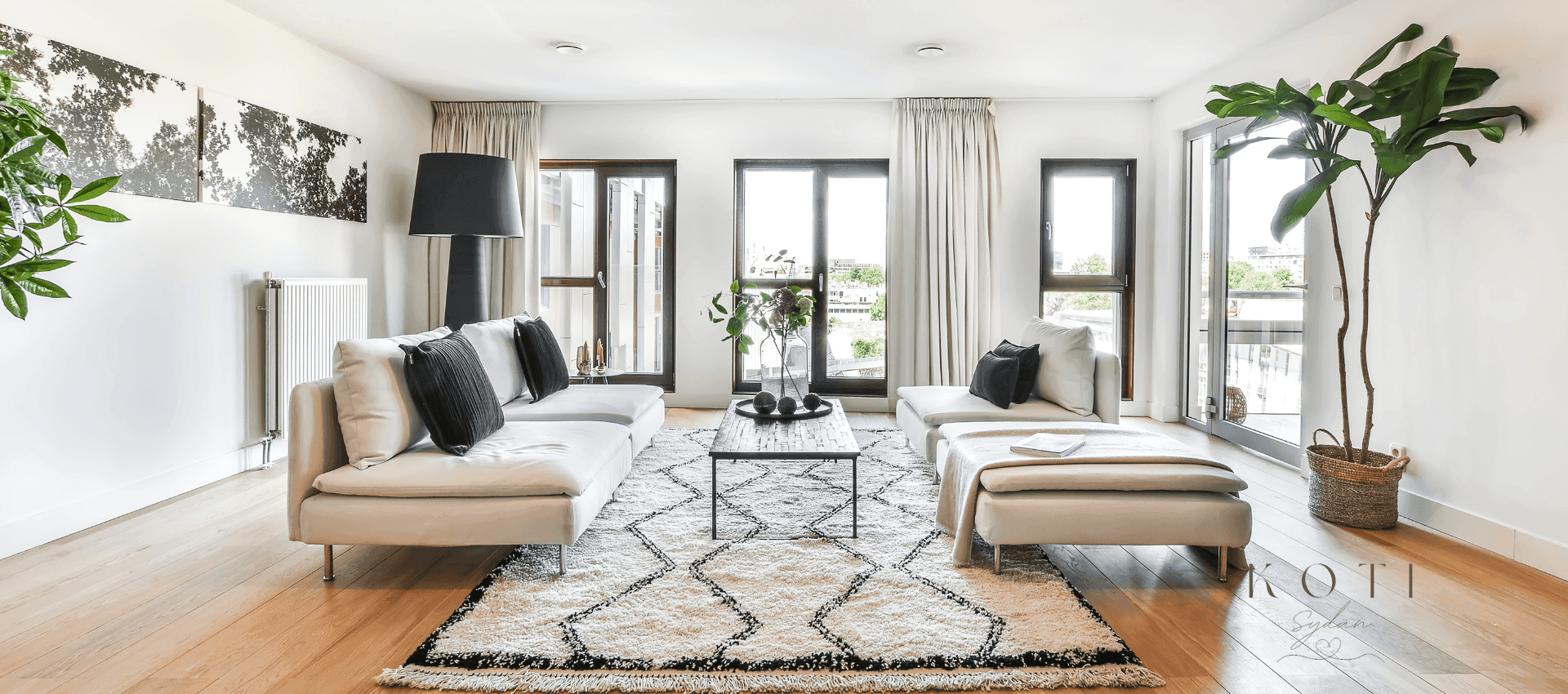
This is the most common and practical layout.
The front legs of the sofa sit on the rug, while the back legs remain on the floor. The same approach works well for chairs.
This layout:
- connects the furniture
- doesn’t require an oversized rug
- works in most living rooms
Typical sizes:
- 5×7 ft (smaller rooms)
- 8×10 ft (most common choice)
This is the safest and most versatile option for everyday use.
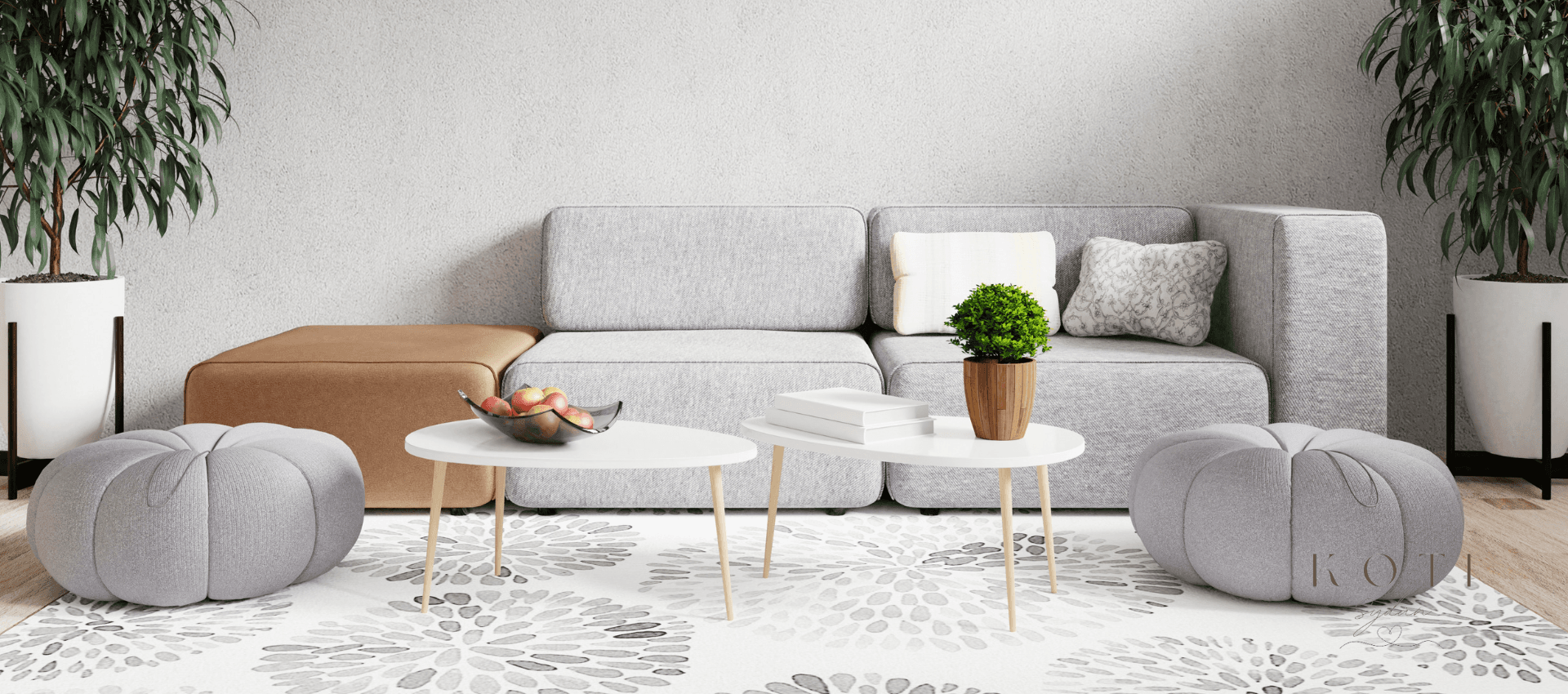
3. Small Rug Under the Coffee Table
This layout works best in smaller spaces or when a lighter, more minimal look is preferred.
The rug sits under the coffee table only and does not extend under the furniture.
Best for:
- small living rooms
- apartments and studios
- minimalist interiors
Typical sizes:
- 4×6 ft
- 5×7 ft
In this setup, the rug acts more as a decorative element than a space-defining feature.
Round vs Rectangular Rugs
Most living room rugs are rectangular, but round rugs can be a surprisingly effective alternative.
A round rug:
- softens the overall look of the room
- works well with smaller seating areas
- pairs naturally with round coffee tables
It’s especially useful in spaces with a lot of straight lines, where a softer shape can create better visual balance.
How Big Should a Rug Be Compared to Your Sofa?
A simple and reliable rule:
👉 Your rug should be at least as wide as your sofa — ideally slightly wider.
Examples:
- 3-seater sofa → 8×10 ft rug
- sectional sofa → 9×12 ft or larger
For a balanced look, leave about 8–12 inches (20–30 cm) of rug visible on each side of the sofa.
This creates a more intentional and visually pleasing layout.
How Rug Material Affects Your Choice
Size is important, but material also plays a key role in how the rug looks and performs in everyday use.
- Wool → warm, durable, and premium
- Cotton → lightweight and casual
- Synthetic fibers → durable and easy to clean
For busy households, especially with pets or kids, washable rugs are often the most practical option.
Frequently Asked Questions
What is the most popular rug size for a living room?
An 8×10 rug is the most popular choice for most living rooms. It provides enough space to connect the sofa and seating area without feeling too small or disconnected. This size works well in both medium and slightly larger spaces.
Are washable rugs worth it?
Yes, especially in busy homes. Washable rugs are easy to maintain, durable, and practical for everyday life. They are a great option for households with pets, kids, or high foot traffic.
Should a rug go under the sofa?
In most cases, yes. At least the front legs of the sofa should sit on the rug. This helps connect the furniture and creates a more cohesive and balanced look in the living room.
Which rug color makes a room look bigger?
Lighter shades like beige, cream, and soft grey reflect more light and help make a room feel more open and spacious. Neutral tones also make it easier to combine different furniture and decor elements.
Are patterned rugs better than plain rugs?
It depends on the space. Patterned rugs add character and depth, while plain rugs create a calmer and more minimal look. If your room already has strong elements, a neutral rug is often the better choice.
How much should you spend on a large area rug?
A good-quality large rug typically ranges from $80 to $300, depending on the material and size. Budget-friendly options like synthetic washable rugs are practical, while natural materials like wool offer a more premium feel and durability.